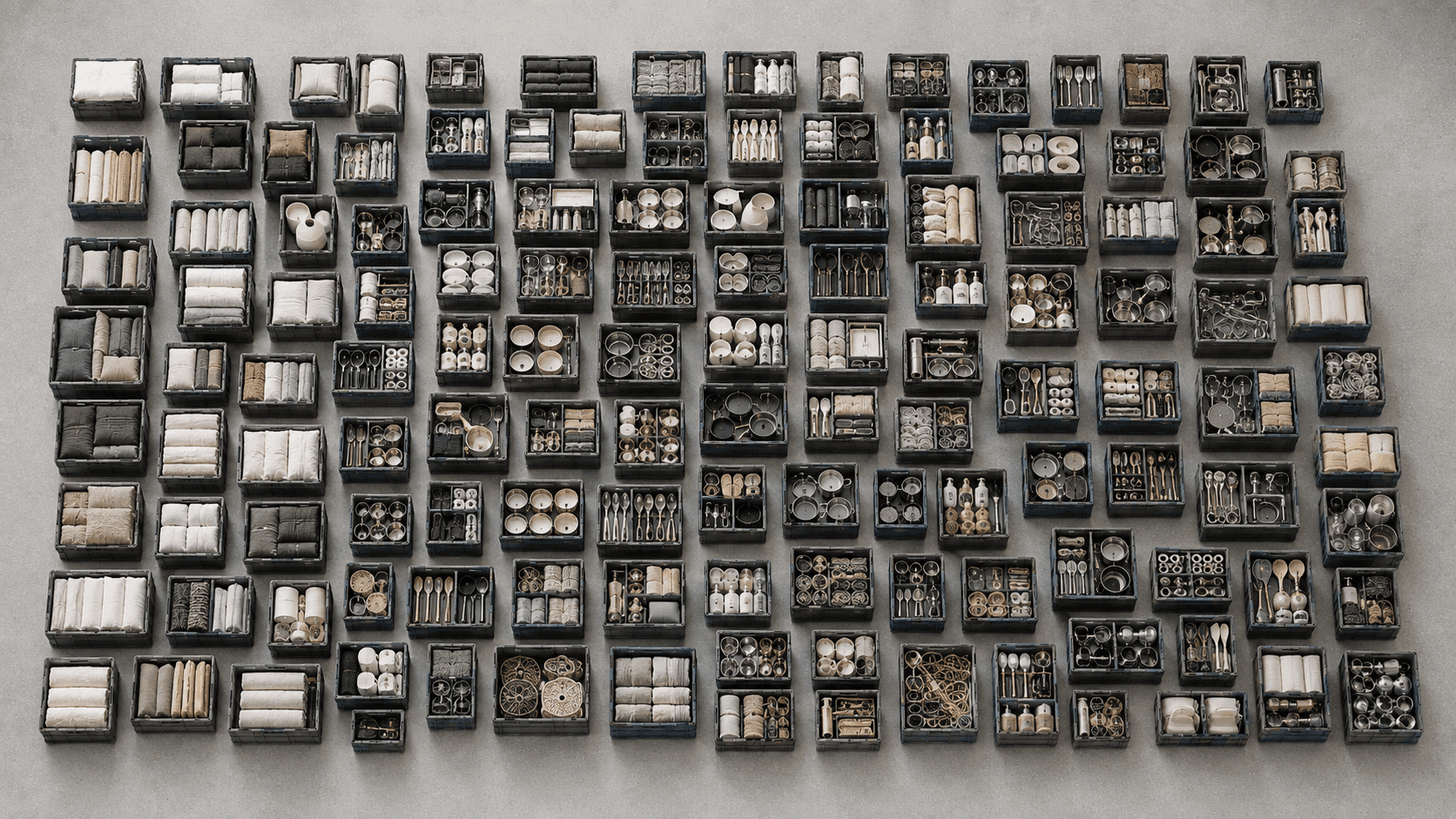
Structure reality so your inventory stays usable over time
Chaos, from the perspective of a rental operator, is not inherently negative.
It suggests that the unit is rich in details and goes beyond the bare minimum, ready to serve someone’s everyday life.
Tenants pay a premium for this.
And now it is up to the operator to run such a highly detailed inventory in a profitable manner.
The problem starts when chaos can no longer be understood.
When operating a furnished or turnkey rental, the goal isn’t perfection — it’s reusability.
Even with a highly detailed inventory in a lived-in space — one that does not resemble a traditional storage room — we can still apply best practices from logistics and warehousing.
Applied correctly, this makes detail-rich chaos reusable for:
- inventory management
- the inspection thereof
- make-ready tasks
- tenant onboarding
- staff or team member turnover
- changes within the inventory itself
This is where space layout for your inventory becomes one of the most important decisions you make — and something that can be improved easily with Mono.
Not structuring spaces properly usually leads to pain
Most inventories assume that knowing is enough. In reality:
- You may know where things belong — but what about your staff?
- What happens when team members change and knowledge leaves with them?
- How much time is wasted reorganizing between tenants?
- Why does inspection quality drop as inventories grow in detail?
The 20-Item Soft Ceiling
Through building Mono and working with very detailed properties, we noticed a pattern:
Inventory spaces with more than ~20 items become tiresome to investigate.
This is not a hard limit. It’s a rule of thumb.
Below it:
- orientation is easy
- inspections are fast
- issues stand out
Above it:
- signal overload starts to feel stressful
- items become harder to find
- inspections slow down
The typical room already contains at least five immovable items, such as floors, walls, ceilings, doors, and windows.
A hallway or bathroom usually stays below 20 items, even when furnished and equipped.
A living room — and certainly a fully stocked kitchen — does not.
When a space crosses 20 items, split it
The default should never be to track less. The solution is to subdivide intentionally.
For detail-rich spaces, we recommend splitting the layout by:
Orientation (north, south, east, west)
Furniture or storage that holds items
Example: A fully stocked kitchen
Before
One kitchen space with 105 items:
utensils, pots, pans, glasses, plates, appliances, cleaning items, walls, floor, ceiling, doors, windows, ...
- • inspections feel slow
- • issues are easy to miss
After subdivision
- Cutlery → Drawer A18 items
- Pots & pans → Lower cabinet left14 items
- Glasses & mugs → Upper cabinet right16 items
- Plates & serving items → Upper cabinet left12 items
- Cleaning items → Sink cabinet9 items
- …additional sub-spaces36 items
Why this matters beyond inventory
This layout approach doesn’t just help with inventory management. It directly improves:
- inspections
- make-ready workflows
- tenant onboarding
- staff training
- future automation
In lean operations, this is well understood. The 5S methodology exists to ensure spaces stay usable over time.
Spaces in Mono
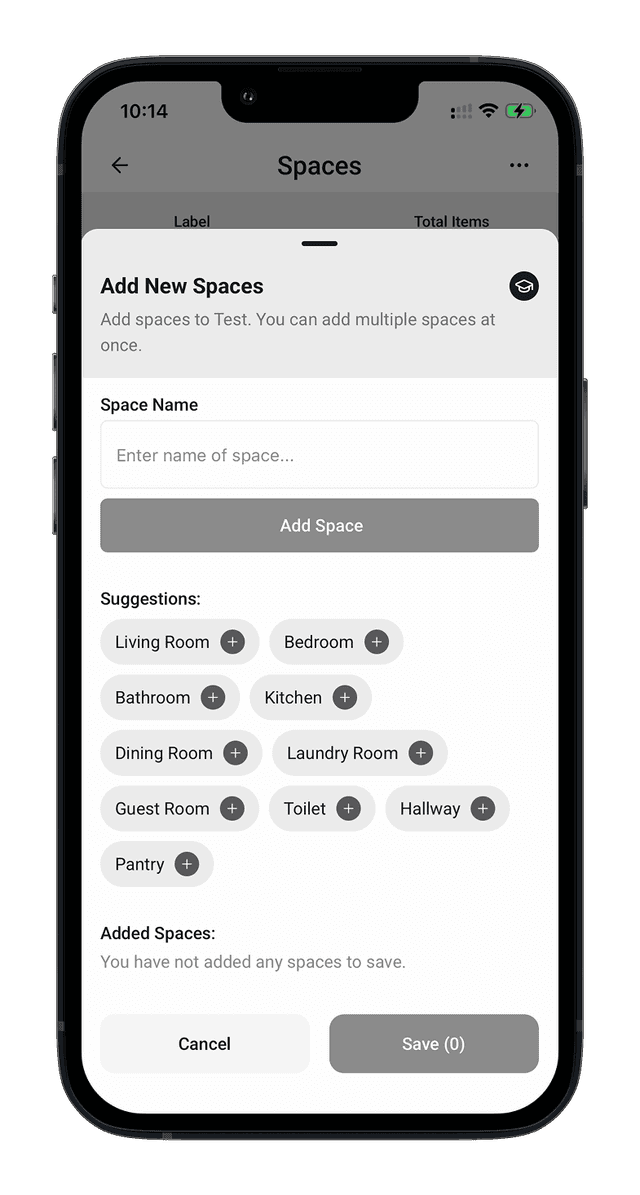
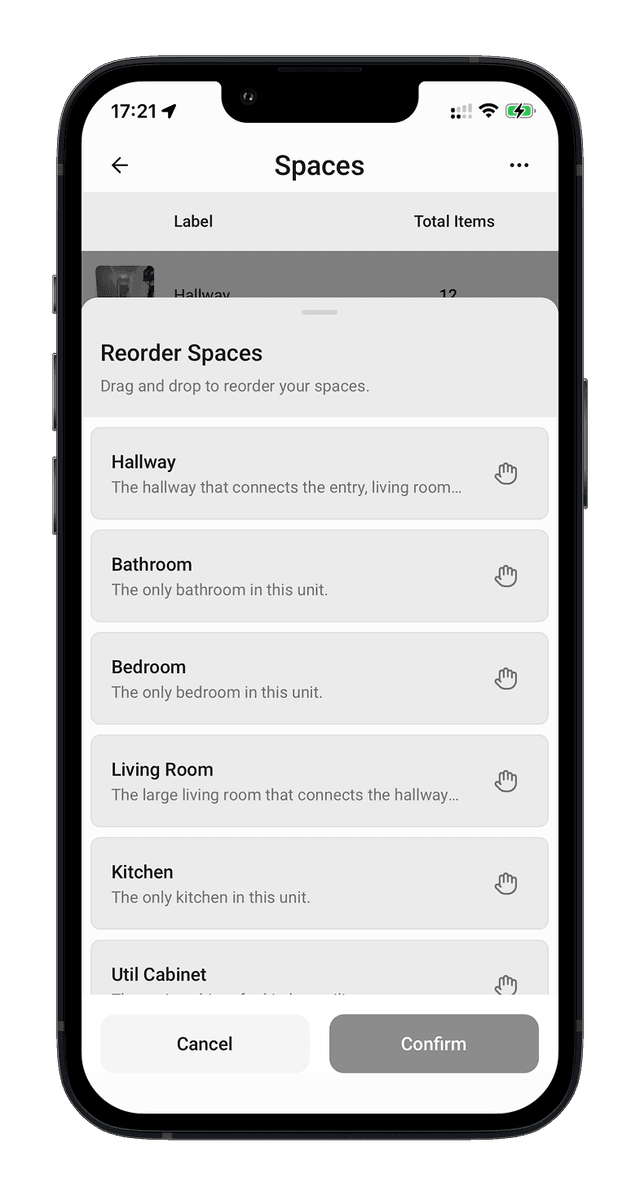
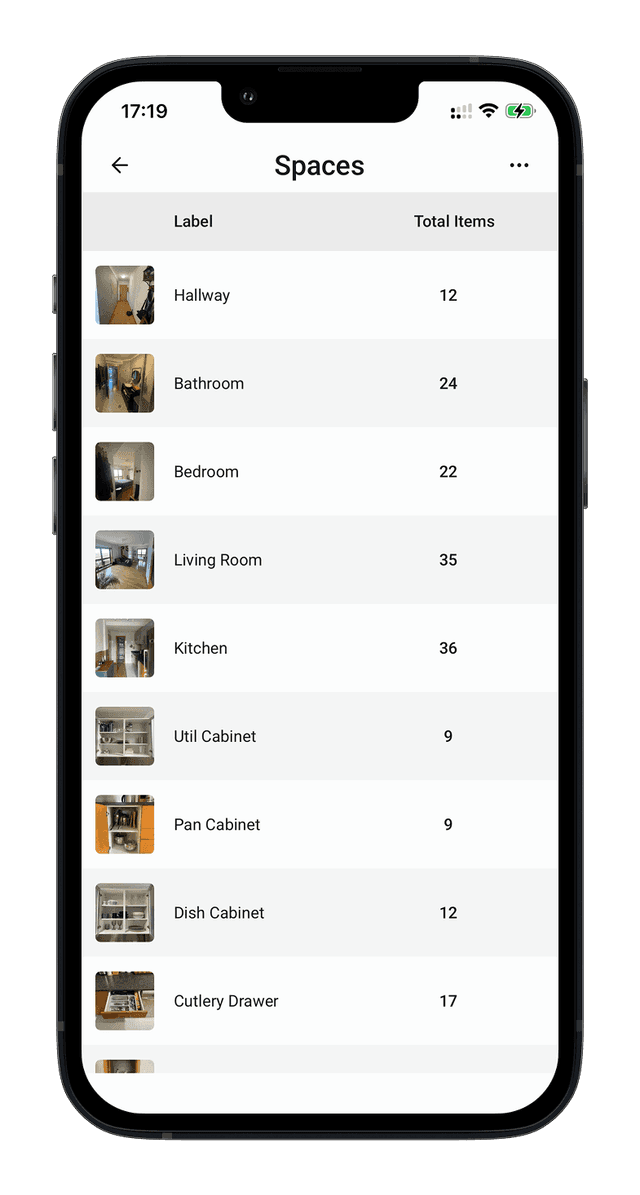
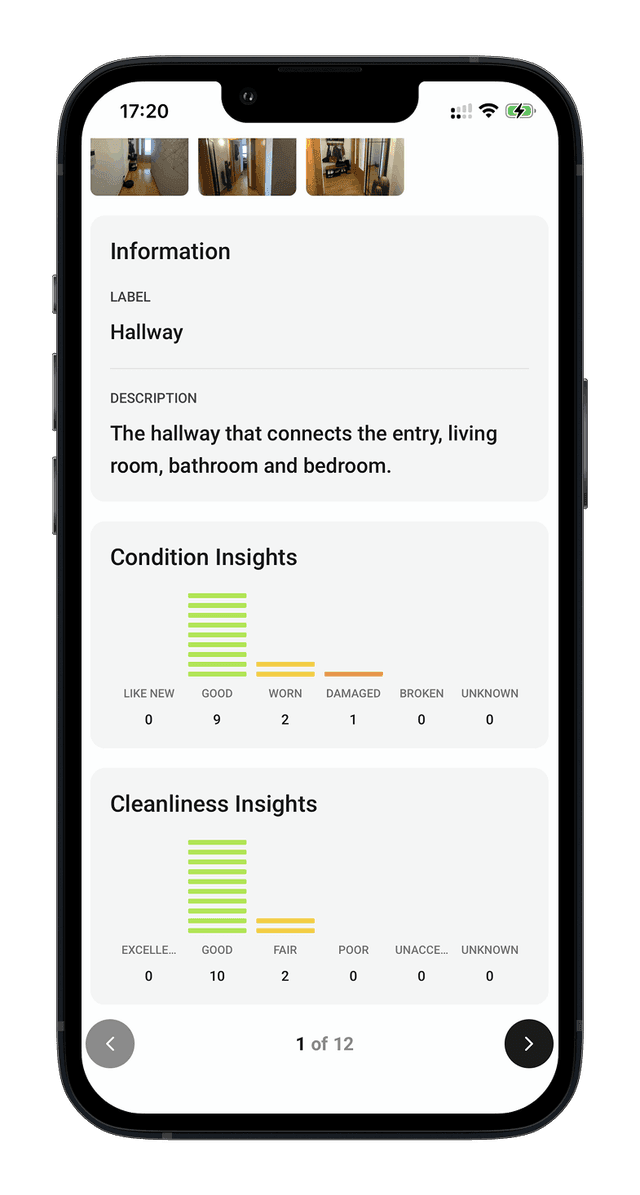
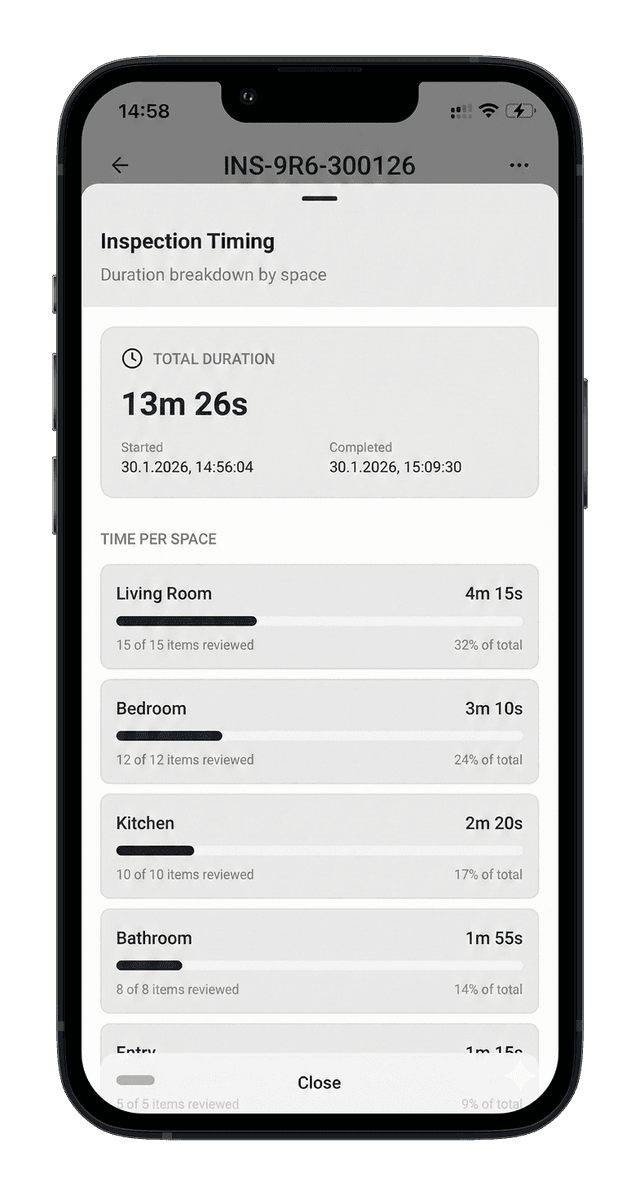
Mono is built around this principle, while keeping complete freedom with no hard limits.
Better space layout reduces inspection time, lowers rework between tenants, and makes onboarding new staff faster.
Over time, this directly reduces operating cost while protecting the premium you charge for detail-rich units.
You can:
- add as many items as you like
- pick a cover photo for fast orientation
- add unlimited additional photos
- name and describe spaces freely
- sort spaces to match real movement through the unit
On top of that you get:
- counts of movables, immovables, and issues per space
- visual distribution of condition and cleanliness across items
- time metrics from every inspection — total and per space — giving feedback on layout quality and helping teams improve mapping over time
The ultimate goal
Any inventory, no matter how rich in detail, should be inspected regularly.
And if the layout is done well and you have the right tool, you can even ask tenants to perform inspections themselves.